
Fixing a dark tooth after a root canal
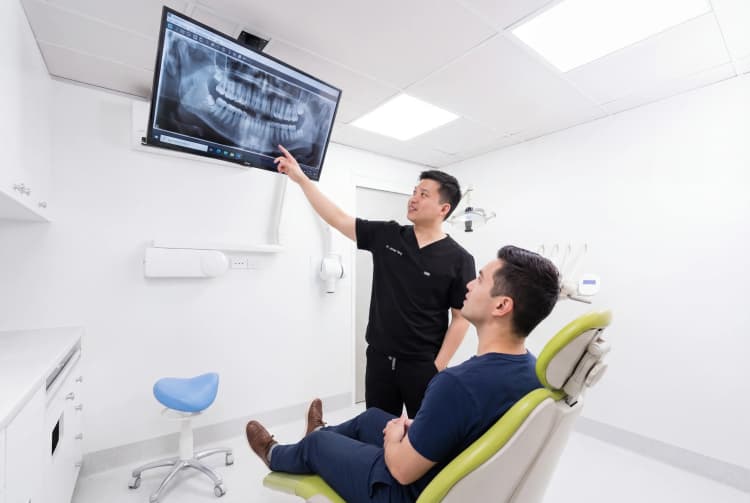
A tooth that has gone dark after a root canal can often be whitened from the inside, then sealed and filled so it blends in, without cutting it down for a crown or veneer. The first step is working out why it went dark. Here is a case I've just finished at Grange Road Dental in Ipswich, which I talked through on camera just before heading out for a run.
Watch the video (3:30)
One dark tooth, and a patient who had stopped smiling
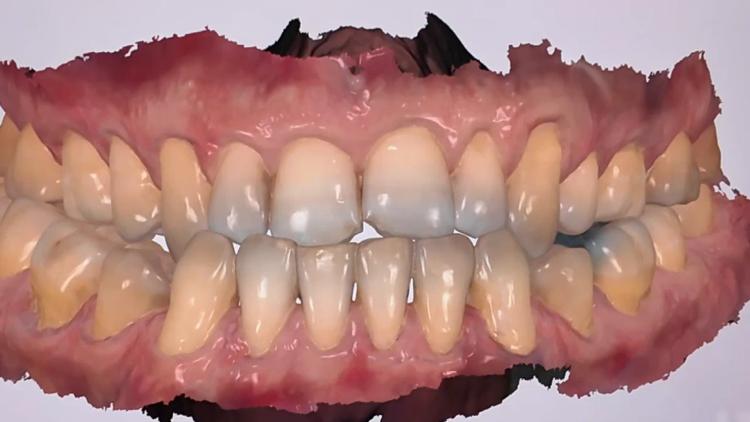
Over the last few weeks I've been seeing a patient over about three visits. One tooth stood out in her smile. It was dark, and it meant she didn't feel like smiling anymore. That has a real effect on your self-esteem and your confidence.
If you can't smile, you're always covering the tooth and just not letting yourself be yourself.
We assessed the tooth and came up with a plan to improve its appearance over several stages.
Why this tooth had gone dark
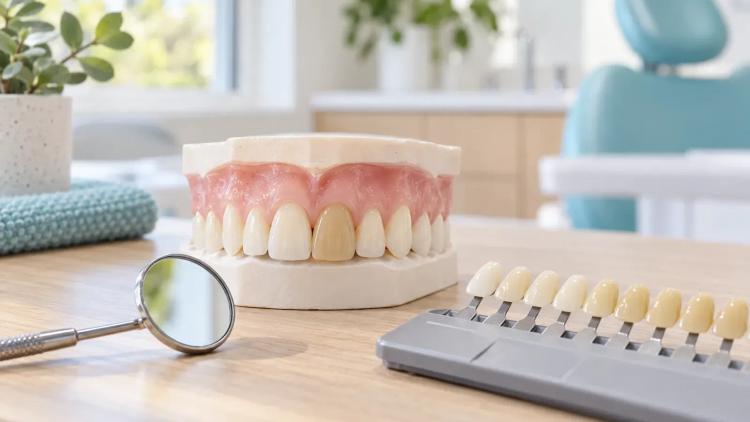
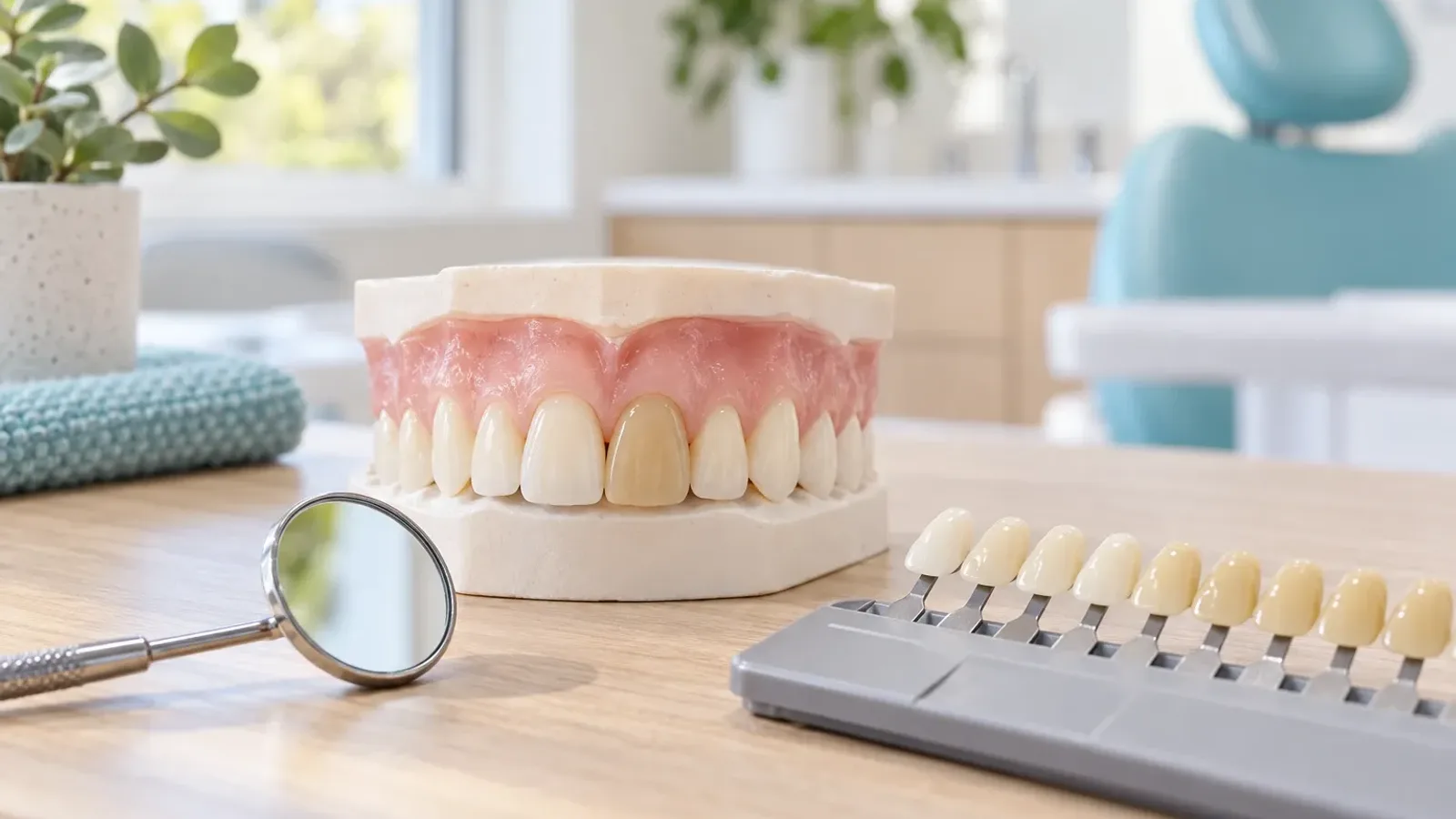
The tooth had already had root canal treatment, and that's why it was dark. Discolouration is a known possible complication of root canal treatment, and healthdirect lists it as one. In this case there was a reason behind it: a crack in the back part of the tooth. Bacteria were getting in through the crack and causing the stain.
So we had to deal with the crack as well as the colour. Stain inside a tooth is very difficult to remove by treating the outside, as the Australian Dental Association notes. (There's more on cracks in fixing a cracked tooth without a crown.)
Why I didn't just cover it with a crown or veneer
The quick way to hide a dark tooth is to cut it down and cover it with a crown or a porcelain veneer. For this tooth, that would have meant taking away way too much tooth structure. We want to conserve the healthy tooth structure, because we want this to be a good tooth for the long term, and that means keeping its structural integrity.
A crown in particular takes a lot. In one widely cited study, preparing a front tooth for a full crown removed roughly two thirds of the tooth above the gum. A veneer takes less, but it is still a permanent change to healthy tooth. That's why we try to keep more of your own tooth instead of a crown wherever that's sensible.
Can a root canal tooth be whitened?
Yes. Internal whitening (also called internal bleaching) is a recognised treatment for a tooth that has darkened after a root canal, and healthdirect lists it as an option. Ordinary whitening from the outside, whether in the chair or with take-home trays, works on the surface of the tooth, so it isn't the right tool for one tooth stained from within.
In general, a whitening gel is placed in the space inside the tooth where the nerve used to be. It's left there for several days, then cleaned out, and the tooth is closed with a filling once it has lightened. Because the gel is sealed inside the tooth, there are no trays to wear at home. A systematic review found internal whitening to be an effective, minimally invasive option for root-canal-treated teeth.
It isn't risk-free. Internal whitening has been linked to a rare problem where the root surface near the gum starts to be absorbed by the body. Safeguards include a protective barrier over the root filling and careful case selection, and the risk is reported to be low with modern technique. It's one more reason the tooth needs a proper assessment first.
Sealing the crack
As well as whitening the tooth, we sealed the crack using resin infiltration. It's part of biomimetic dentistry: repairing a tooth in a way that protects as much of its natural structure as possible. It's a technique I've learnt and use with our patients, and I've taught it to Dr James and Dr Kien here at Grange Road Dental too.
Making the filling at the gum line blend in
There was also an existing filling on the outside of the tooth, right at the gum line. Once the tooth was lighter it no longer matched, so after the internal whitening we replaced it.
We layered an adjusted opaquer, an opaque tooth-coloured material, underneath, then built a new tooth-coloured filling on top to blend that part of the tooth in with the rest of the whitened tooth.
The overall result is a really nice looking tooth, and now the patient can smile.
An honest look at how long it will last
Because of the crack, this may not be a good tooth in the long term. But we didn't want to go to the expense of taking the tooth out and placing a dental implant straight away. While the bone support around the tooth is good and the gums are good, we're holding onto it for as long as possible.
A dental implant is a really good option for replacing missing teeth, but it's an end of the road option, and this tooth isn't there yet. If it ever can't be kept, an implant is still an option then.
How the cost compared
Overall this was a cost-effective approach for this patient. A crown or a veneer is a significant expense: both involve a lab fee, plus extra time to prepare the tooth and bond the restoration properly. A dental implant would have been more expensive again. Prices depend on the tooth, so I haven't put them here.
If you have a tooth that has gone dark
Not every dark tooth has had a root canal, and not every dark tooth can be treated this way. A tooth that is newly darkening can point to an infection or an injury, so it's worth having it looked at rather than guessing. Whether internal whitening suits you depends on what's behind the colour, whether there's a crack, and how healthy the tooth and the bone around it are.
If you're in Ipswich or nearby and one tooth has you covering your smile, we'd be glad to take a look and talk through your options, including whether keeping the tooth makes sense. Call us on (07) 3281 6666 or book online.
Can a tooth that has gone dark after a root canal be whitened?
Often, yes. At Grange Road Dental we can whiten a root-canal-treated tooth from the inside, which is called internal whitening. Ordinary whitening works on the outside of the tooth, so it isn't the right tool for one tooth stained from within. Whether internal whitening suits you depends on what caused the darkening, so we assess the tooth first.
Why does a tooth go dark after a root canal?
Discolouration is a known possible complication of root canal treatment. In one case Dr Andrew treated, the tooth was dark because a crack at the back of the tooth was letting bacteria in, and the bacteria stained it. That is why we look for the cause before treating the colour, and why a tooth that is newly darkening should be checked rather than assumed to be harmless.
Do I need a crown or veneer on a dark root canal tooth?
Not necessarily. A crown or porcelain veneer hides a dark tooth, but it means cutting away healthy tooth structure. Where the tooth is otherwise sound, we would rather keep that structure, whiten the tooth from the inside, seal any crack and rebuild the filling so it blends in. Some teeth do need a crown, so we'd look at yours before recommending anything.
When is a dental implant the right choice for a dark tooth?
A dental implant is a really good option for replacing a tooth that is missing or can't be kept, but at Grange Road Dental we see it as the end of the road rather than the first step. If the tooth still has good bone support and healthy gums, we would usually try to keep it for as long as possible, and an implant remains available later if the tooth fails.
Recent articles
Fixing a dark tooth after a root canal
17 Nov 2026
How to fix chipped front teeth
16 Nov 2026