
How to fix chipped front teeth
If the edges of your front teeth have started to chip, the short answer is that they can usually be rebuilt with tooth-coloured bonding, so the teeth look the way they used to. A good plan doesn't stop at the repair, though. Here at Grange Road Dental in Ipswich, Dr Andrew also looks at why the chips happened so the new edges are looked after, and he lets you see and feel the new shape before anything permanent is done.
This is a real case. A patient came to see Dr Andrew about small chips along the biting edges of his two middle front teeth, and kindly agreed to let us talk about his teeth. Dr Andrew used a TRIOS digital scan to explain what is going on and what he plans to do. The treatment is still to come, so this post follows the plan rather than a finished result.
Watch the video (2:13)
Start with the bite, not just the chip
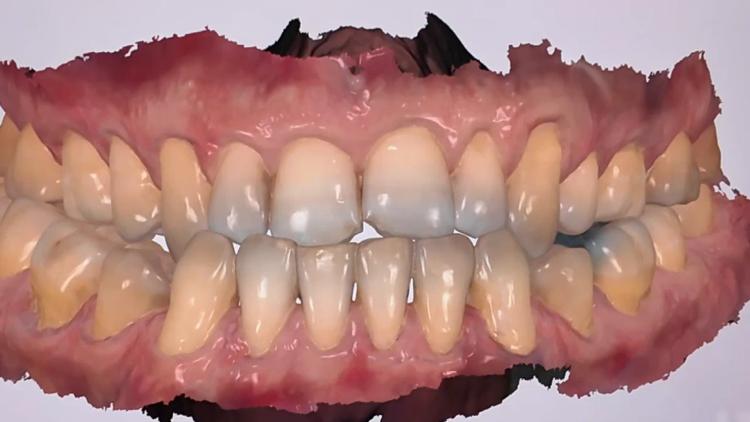
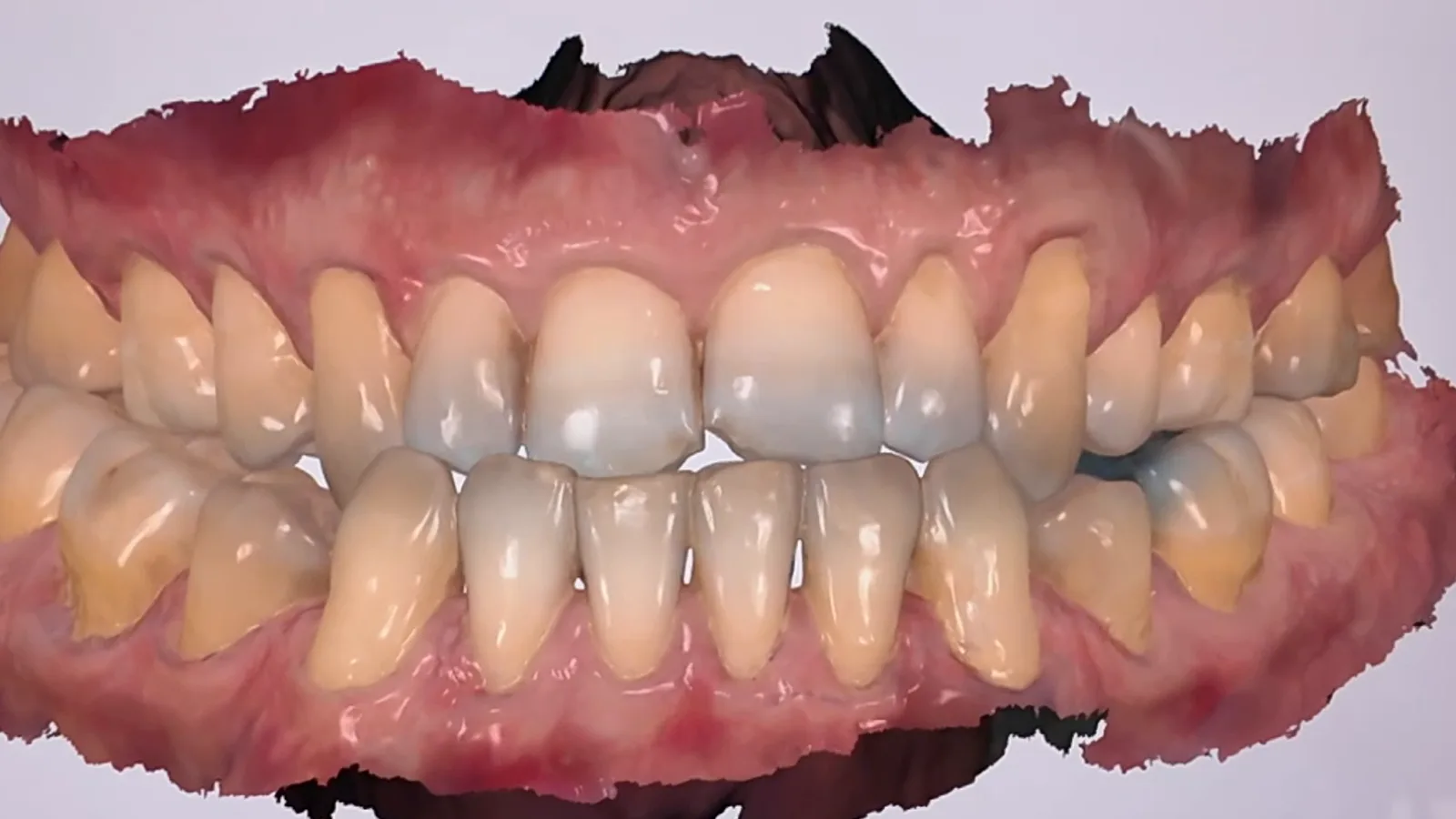
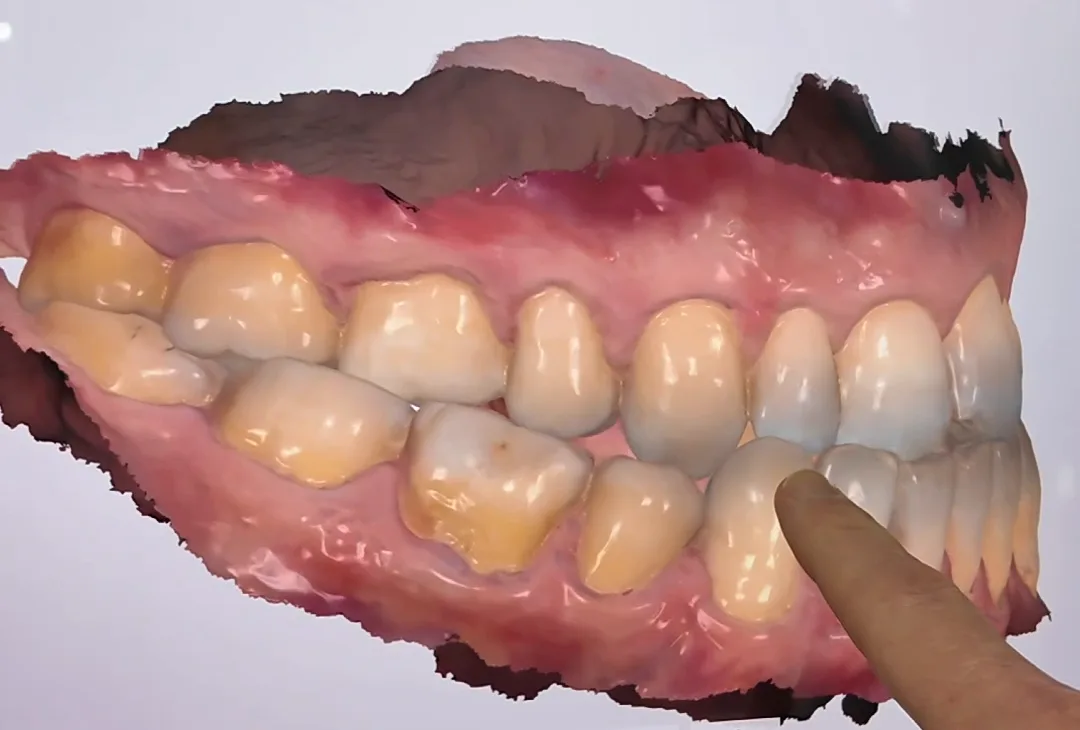
A TRIOS scan builds a 3D model of your teeth in colour. On Dr Andrew's laptop, the patient's upper and lower teeth appear biting together, and he can turn the model around, looking at the front and the side as if the teeth were in his hand.
Before he looks at the chips, he looks at how the teeth meet. With a finger on the screen he points to the way this patient's front teeth come together, which he would typically call an underbite. Then he makes the point that matters most for anyone with chipped front teeth: these teeth take "a fair bit of force". The biting edges are thin and they do a lot of work, so when they chip it is worth asking what is putting that load on them.
What a mirror can't show you
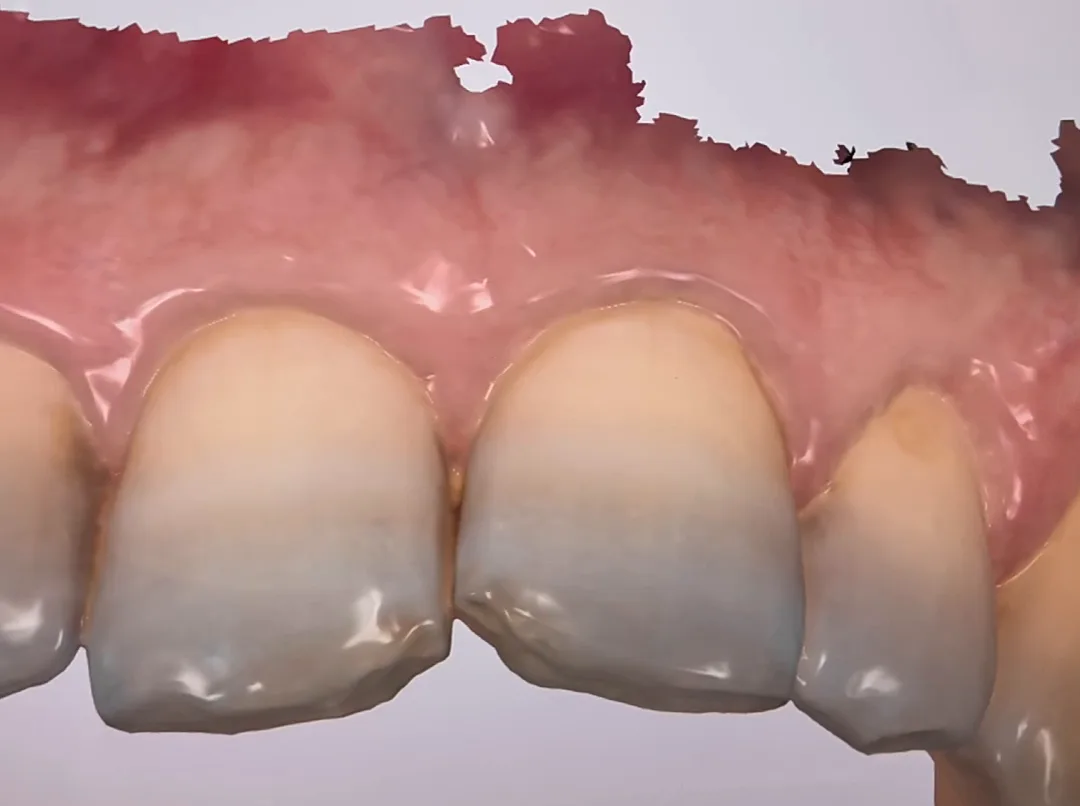
Next, Dr Andrew removes the lower teeth from the scan so the upper front teeth stand on their own. The chips are easy to see: small, uneven notches along the biting edge of the two middle teeth. This is what the patient came in about.
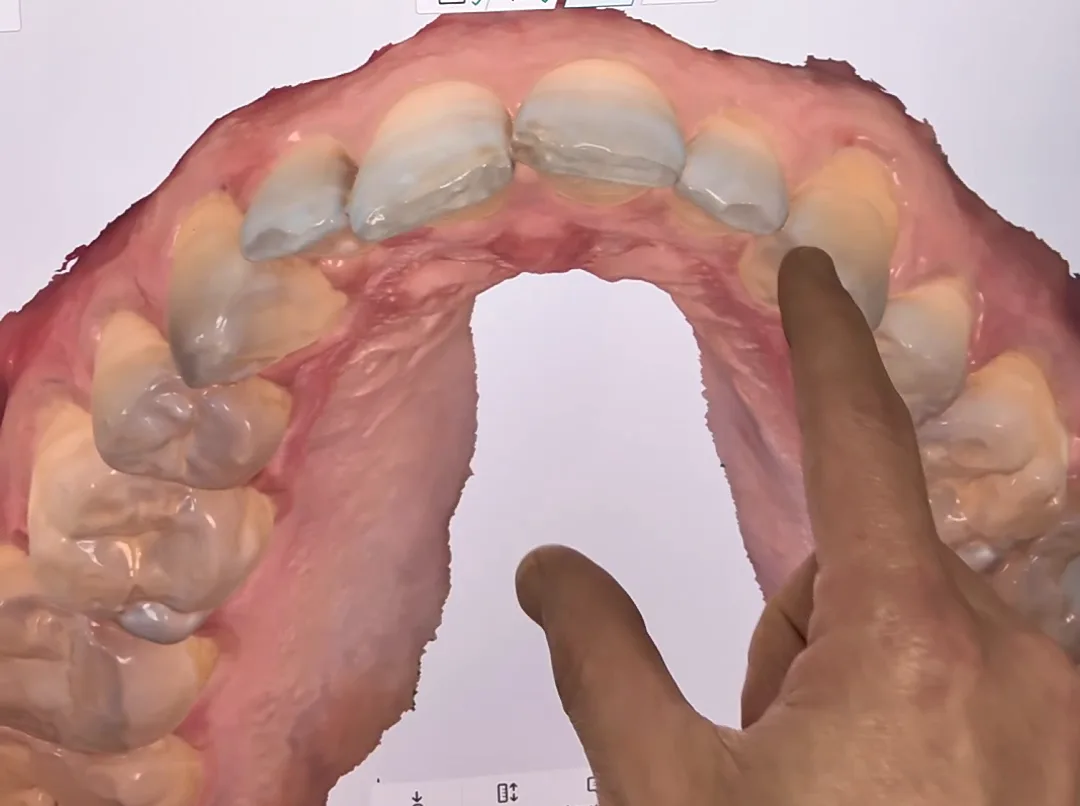
Then he turns the model to look up from underneath, at the tongue side of the upper teeth and the roof of the mouth, and zooms in. The back surfaces and edges of your front teeth are hard to see in a hand mirror, and this view makes them clear to both dentist and patient.
Up close, the two middle teeth show what Dr Andrew calls incisal (biting) edge wear. Wear like this tends to come on slowly, which is exactly why people stop noticing it. It is the same pattern we describe in this story about wear you stop noticing.
The repair: rebuilding the edges with bonding
Dr Andrew's plan is to repair the chips and protect the biting edge at the same time, using BioClear filling methods and biomimetic bonding. In plain terms, bonding means building the edge back up with tooth-coloured filling material that is bonded to your tooth. BioClear tooth-coloured bonding is one way of doing that: the filling material is heated and shaped in a mould held around the tooth. Biomimetic simply means designed to copy nature, and you can read why we use biomimetic bonding if you'd like the detail.
What are we aiming for? Dr Andrew says this kind of repair will help recreate the biting edges so the teeth look the way they used to before they were chipped. It is the same thinking behind our wider work in rebuilding chipped and worn front teeth: restore how the teeth look and work, and keep as much of your own tooth as we can.
Why the repair isn't the whole plan
Dr Andrew is clear that fixing the biting edges will improve things. He is also thinking about what happens after the repair, given the force these teeth take. This is what he said about it:
I think possibly a protection splint here would be a good idea [for him] just to protect everything overall in the long term and make sure there's no further wear and tear on his teeth.
A splint is a custom-made cover, usually hard plastic, that fits over the upper or lower teeth. It is also called a bite splint or night guard. According to the Australian Dental Association, its job is to protect teeth from wear and damage. It doesn't change how you bite or remove the cause, and not everyone needs one, which is why Dr Andrew says "possibly" and treats it as part of the conversation with the patient. At Grange Road Dental, a custom protection splint is made from digital impressions and 3D printed to fit.
If you wonder whether your own teeth are under that kind of strain, our article on how grinding wears teeth and what a splint does is a good place to start.
Trying the new shape before anything is permanent
Here is the part many people tell us they'd want. Before the repair, Dr Andrew will do a digital wax-up, which is a design of the planned shape of the edges made on the scan. Then comes a mock try-in, where the planned shape is tried in the mouth. As he puts it:
We can see what's going on, or [he] can feel what's going on and what it looks like before we actually complete the process. That's before we've done anything to the teeth that's irreversible.
A preview like this does two jobs. You get to see and feel the shape, and we get to check that what we've designed matches what you're hoping for. It is a preview, not a promise of an identical final result, but it means you are making the decision with more than a drawing to go on.
What happens next
This patient's repair and splint are still to come, and we'll add the next stages to this post as they happen.
If your own front teeth are chipping, a check is the sensible next step. It helps to tell us when you first noticed it, and whether it came on gradually or after a knock. A chip from a sudden accident should be seen promptly, as healthdirect advises. For anything that has crept up slowly, we'll look at how your teeth meet, scan them if it helps, and talk through your options. Call us on (07) 3281 6666 or book online.
Can chipped front teeth be repaired?
Yes. At Grange Road Dental we can usually rebuild small chips along the biting edges of the front teeth with tooth-coloured bonding, using BioClear filling methods and biomimetic bonding. The aim is to recreate the edges so the teeth look the way they did before they chipped. We look at the teeth on a 3D scan first, so we can plan the repair and see how the teeth meet.
Can I see what my front teeth will look like before they are repaired?
Yes. Before a repair like this we design the planned shape digitally in a digital wax-up, then do a mock try-in so you can see and feel the new shape in your mouth. This happens before anything irreversible is done to your teeth. It is a preview of the plan rather than a guarantee of an identical final result.
Why do front teeth chip, and will they chip again?
The biting edges of the front teeth are thin and take a fair bit of force, so we look at how your upper and lower teeth meet as well as at the chips themselves. A repair improves the edges, and where we think the teeth need long-term protection from further wear and tear, we may suggest a custom protection splint.
Do I need a splint after my front teeth are repaired?
Not everyone does. A protection splint is a custom-made cover that fits over the upper or lower teeth to protect them from wear and damage. At Grange Road Dental we'll look at how your teeth meet and how much force the front teeth take, then talk with you about whether a splint is a good idea in your case.
Recent articles
Fixing a dark tooth after a root canal
17 Nov 2026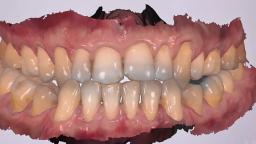
How to fix chipped front teeth
16 Nov 2026