
Jaw Exercises After Wisdom Teeth Removal (and Dental Visits)
If you have ever walked out of a dental appointment with a stiff or achy jaw, you are not alone. Keeping your mouth open for an extended period, especially during longer procedures like wisdom teeth removal, root canal treatment, or a series of fillings, can leave the muscles around your jaw feeling tight and fatigued. The good news is that this is completely normal. After a routine appointment it usually settles within a day or two, and after a procedure such as wisdom teeth removal it typically eases over the following week or two.
That said, a few simple exercises can make a real difference. Whether you are preparing for an upcoming appointment, recovering afterwards, or just dealing with general jaw tension from stress or clenching, these four exercises are easy to do at home and take only a few minutes. If the thought of a longer appointment makes you anxious, it is also worth knowing that minimal sedation can help make it feel more manageable.
Jaw stiffness after wisdom teeth removal (trismus)
If your jaw feels tight and you cannot open your mouth as wide as usual after having wisdom teeth out, this is common and has a name: trismus. It happens because the surrounding muscles become inflamed and tend to "guard" the area while it heals, and because holding your mouth open during the procedure tires those muscles out. It is a normal part of recovery rather than, in most cases, a sign that something has gone wrong.
For most people, stiffness is at its most noticeable in the first two to three days and then eases over the following week or two. Everyone heals at their own pace, so treat these as rough guides rather than fixed timelines.
When to start, and when to rest. In the first day or two after surgery, the priority is protecting the blood clot in the socket, so avoid vigorous mouth movements, straws and anything that disturbs the area. Gentle jaw exercises are usually introduced a little later. Commonly this is a few days after surgery, once the initial swelling and bleeding have settled, and only if it feels comfortable. Always follow the specific aftercare advice from your dentist or oral surgeon, as timing can vary with each case.
Once healing is underway, the four gentle exercises further down this page can help ease muscle tightness and gradually restore your range of motion. This post is about the jaw muscles. For looking after the socket itself, such as bleeding, when to start salt water rinses and how to avoid dry socket, see our tooth extraction aftercare instructions. You can also read more about the procedure and recovery on our wisdom teeth removal page.
Get in touch with us if your pain gets worse after the first couple of days rather than better, you develop a fever, you notice a bad taste, odour or discharge, or the stiffness is severe enough to stop you eating or drinking. Any difficulty breathing or swallowing needs urgent medical attention.
Why does my jaw feel stiff after the dentist?
Your jaw joint (the temporomandibular joint, or TMJ) is surrounded by muscles that control opening, closing, and side-to-side movement. When you hold your mouth open for an extended period, those muscles work continuously in a stretched position. Just like any other muscle in your body, they can feel sore or tight afterwards.
Other things that can contribute to jaw tension include:
- Stress and clenching. Many people clench their jaw or grind their teeth without realising it, especially during sleep or stressful periods.
- Poor resting posture. Holding your teeth together when your jaw should be relaxed puts unnecessary load on the joint and muscles throughout the day.
- Post-procedure swelling. After procedures like wisdom teeth removal, some inflammation around the joint is expected and temporary.
How these exercises help
The exercises below are commonly prescribed by physiotherapists for jaw-related tension and discomfort. They work by gently stretching the muscles, improving range of motion, and encouraging the jaw to return to its natural resting position. They are safe, require minimal equipment, and can be done sitting in a chair at home.
You can use them:
- Before a dental appointment, to warm up the jaw muscles and improve flexibility ahead of time
- After a dental appointment, to ease stiffness and help the muscles recover
- Any time your jaw feels tense, whether from clenching, stress, or general discomfort
Download all 4 exercises as a printable PDF
Exercise 1: Resting jaw position
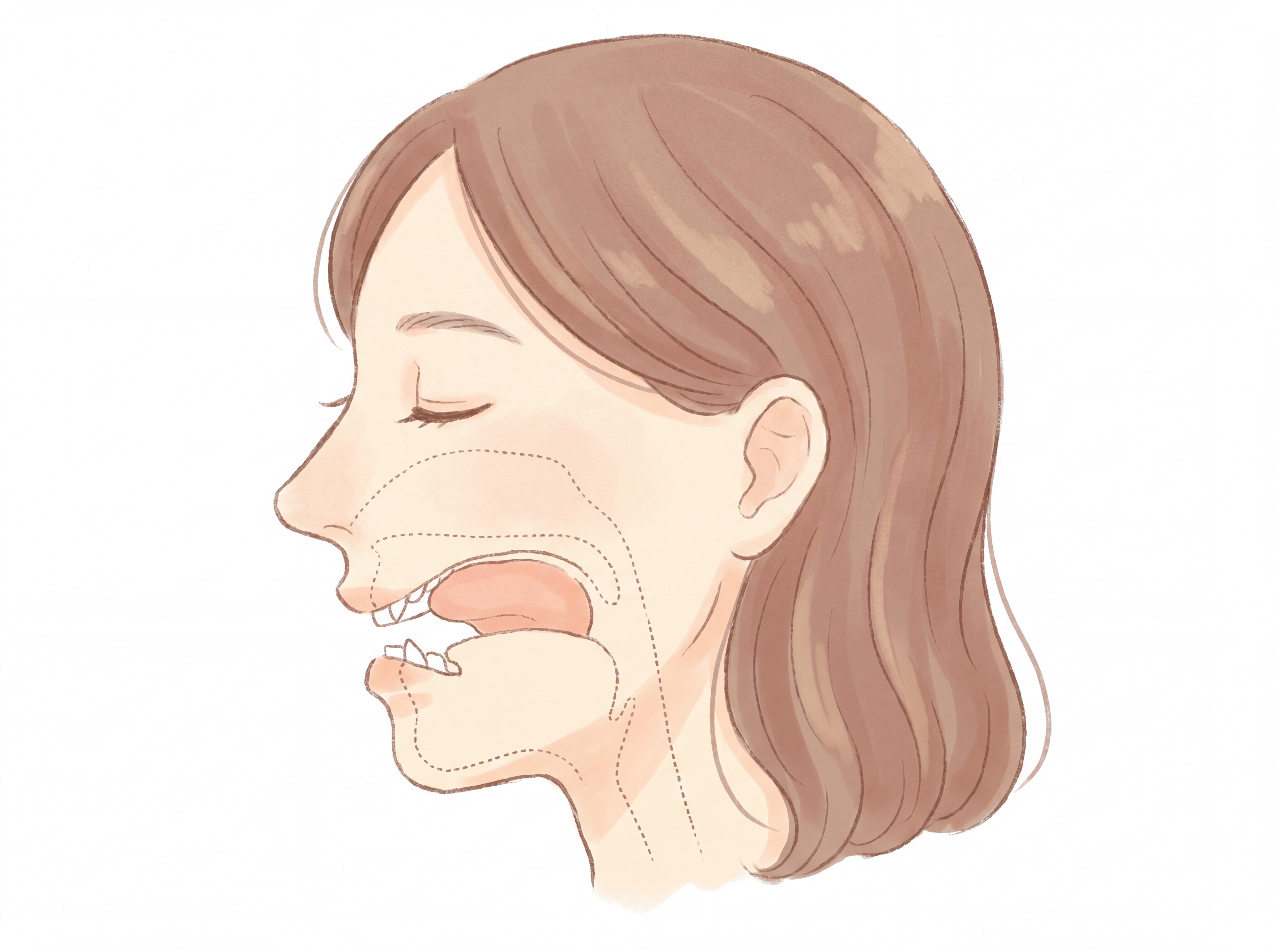
This is not so much an exercise as a reset. Many people unknowingly hold their teeth together throughout the day, which keeps the jaw muscles engaged when they should be resting. A good rule of thumb is that your teeth should only touch when you chew. The rest of the time, they should sit slightly apart.
- Place your tongue on the roof of your mouth, with the tip just behind your front teeth, as if you were about to say the letter N.
- Let your teeth sit slightly apart. They should not be touching.
- Hold this position for 10 seconds.
This is the correct resting posture of your jaw. Try to return to it whenever your jaw is not actively in use. Between meals, while reading, or watching TV are all good times to practise. Over time, it becomes second nature.
If you find yourself clenching or holding your teeth together regularly, it is worth mentioning to our team at your next visit. Your dentist or hygienist can assess whether it may be contributing to jaw tension or wear.
Exercise 2: Masseter massage


The masseter is the large muscle on the side of your jaw, the one you can feel tighten when you clench your teeth. A gentle self-massage can help release tension in this area.
- Sit upright with your feet flat on the floor.
- Tilt your head forward slightly and place your index and middle fingers just below your cheekbone.
- Gently clench your teeth to locate the masseter muscle. You will feel it tighten under your fingers. Then relax your jaw.
- Using your fingers in a circular motion, apply gentle pressure to the muscle for 30 seconds.
Repeat for 3 sets on the side that feels tightest, or on both sides if needed.
Exercise 3: Tongue on roof, open and close


This exercise improves your jaw's range of motion in a controlled way. Keeping your tongue on the roof of your mouth acts as a natural guide, encouraging the jaw to open in a straight line.
- Sit upright with your feet flat on the floor.
- Place your tongue on the roof of your mouth, just behind your front teeth.
- Keeping your tongue pressed there, open your mouth as wide as is comfortable.
- Hold for 1 second, then gently close and return to the starting position.
Repeat 10 times per set. Complete 3 sets.
Exercise 4: Stick assisted lateral glides


This exercise uses a simple stick (a popsicle stick or tongue depressor) as a guide for gentle side-to-side jaw movement. It helps improve lateral mobility and can be particularly useful if your jaw feels locked or restricted.
- Place the stick lightly on your bottom teeth.
- Gently and slowly move your jaw to the left, keeping your bottom teeth in light contact with the stick.
- Return your jaw to the centre.
- Wait 1 second, then repeat to the right.
Repeat 10 times each side. Complete 2 sets. Move slowly and gently. This exercise should never be painful.
Download all 4 exercises as a printable PDF
When to talk to your dentist
Mild jaw stiffness after a dental appointment is normal and usually resolves within a couple of days. However, if you experience any of the following, it is worth getting in touch:
- Pain that persists for more than a few days or gets worse
- Clicking, popping, or locking of the jaw joint
- Difficulty opening or closing your mouth
- Frequent headaches or earaches that seem related to your jaw
These may indicate a TMJ issue that benefits from professional assessment. At Grange Road Dental, we can evaluate your jaw function during a routine check-up and recommend next steps if needed, which may include a referral to a physiotherapist or the use of a custom splint or night guard.
If you have any questions about jaw comfort before or after your next visit, our team is always happy to help. Call us on (07) 3281 6666 or book an appointment online.
We welcome patients from right across Ipswich and the surrounding suburbs, including Booval, Bundamba, North Ipswich, Ripley and Deebing Heights. See all the areas we serve.
How long does jaw stiffness last after wisdom teeth removal?
Jaw stiffness after wisdom teeth removal, known as trismus, is usually most noticeable in the first two to three days and then eases over the following week or two. Most people feel much more comfortable within a couple of weeks. Everyone heals at their own pace, so use these as rough guides. If your stiffness is getting worse rather than better after the first few days, get in touch with us.
Are jaw exercises safe after wisdom teeth removal?
Gentle jaw exercises are generally safe once the early healing phase has passed and only if they feel comfortable, not painful. In the first day or two the priority is protecting the blood clot in the socket, so it is best to rest and avoid vigorous mouth movements during that time. Follow the specific aftercare advice from your dentist or oral surgeon, as the right timing can vary from person to person.
When can I start jaw exercises after an extraction?
Gentle jaw stretches are commonly started a few days after surgery, once the initial swelling and bleeding have settled and any movement feels comfortable. Before that, focus on protecting the clot: avoid straws, vigorous rinsing and wide mouth movements. Your dentist or surgeon can tell you when it is right to begin based on how your recovery is going.
How do I stretch my jaw after wisdom teeth removal?
Once healing has begun, gentle controlled movements are the goal, such as slowly opening and closing your mouth as far as is comfortable and easing the jaw a little from side to side. The four exercises on this page walk through simple physiotherapist-recommended movements you can do at home. Move slowly and stop if anything is painful, and check with your dentist first if you are unsure whether you are ready.
Recent articles



Why do crowns fail, and how long do they last?
24 Sept 2026