Why we take dental x-rays
When you visit Grange Road Dental for a checkup, we may recommend taking some x-rays. You might wonder why they are needed when your teeth look and feel fine. The answer is simple: x-rays reveal what we cannot see with the naked eye.
What x-rays help us find
Even with a thorough visual examination, there are areas of your mouth that remain hidden from view. Dental x-rays allow us to detect:
- Decay between teeth where your toothbrush and floss cannot reach
- Decay under existing fillings that may be developing beneath the surface
- Bone loss from gum disease which can occur without obvious symptoms
- Infections at tooth roots that may not yet be causing pain
- Impacted teeth such as wisdom teeth that have not erupted properly
- Cysts or other abnormalities in the jaw
Early detection makes a real difference
The main benefit of x-rays is catching problems early. A small cavity spotted on an x-ray can often be treated with a simple filling. Left undetected, that same cavity could grow larger, eventually requiring more extensive treatment such as a crown or root canal therapy.
The same applies to gum disease. When we can see early signs of bone loss on an x-ray, we can take action before the condition progresses. Early intervention almost always means simpler, more comfortable treatment.
X-rays work alongside a careful visual examination rather than replacing it. You can read how a thorough exam with magnification catches tooth decay early in one patient's story, which shows why both matter for spotting small problems while they are still small.
What to expect during x-rays
Taking x-rays is quick and comfortable. Our dental hygienist or assistant will typically take them at the start of your appointment. You will be asked to bite gently on a small sensor or film while the image is captured. The process takes just a few seconds per image.
How often you need x-rays depends on your individual oral health. Some patients benefit from annual x-rays, while others may need them less frequently. We will always discuss what is recommended for your situation.
Types of dental x-rays
There are several types of x-rays we may use, depending on what we need to see:
- Bitewing x-rays show the upper and lower back teeth in a single image. They are excellent for detecting decay between teeth and checking how well your teeth meet when you bite.
- Periapical x-rays capture the entire tooth from crown to root, including the surrounding bone. These are useful when we need to examine a specific tooth in detail.
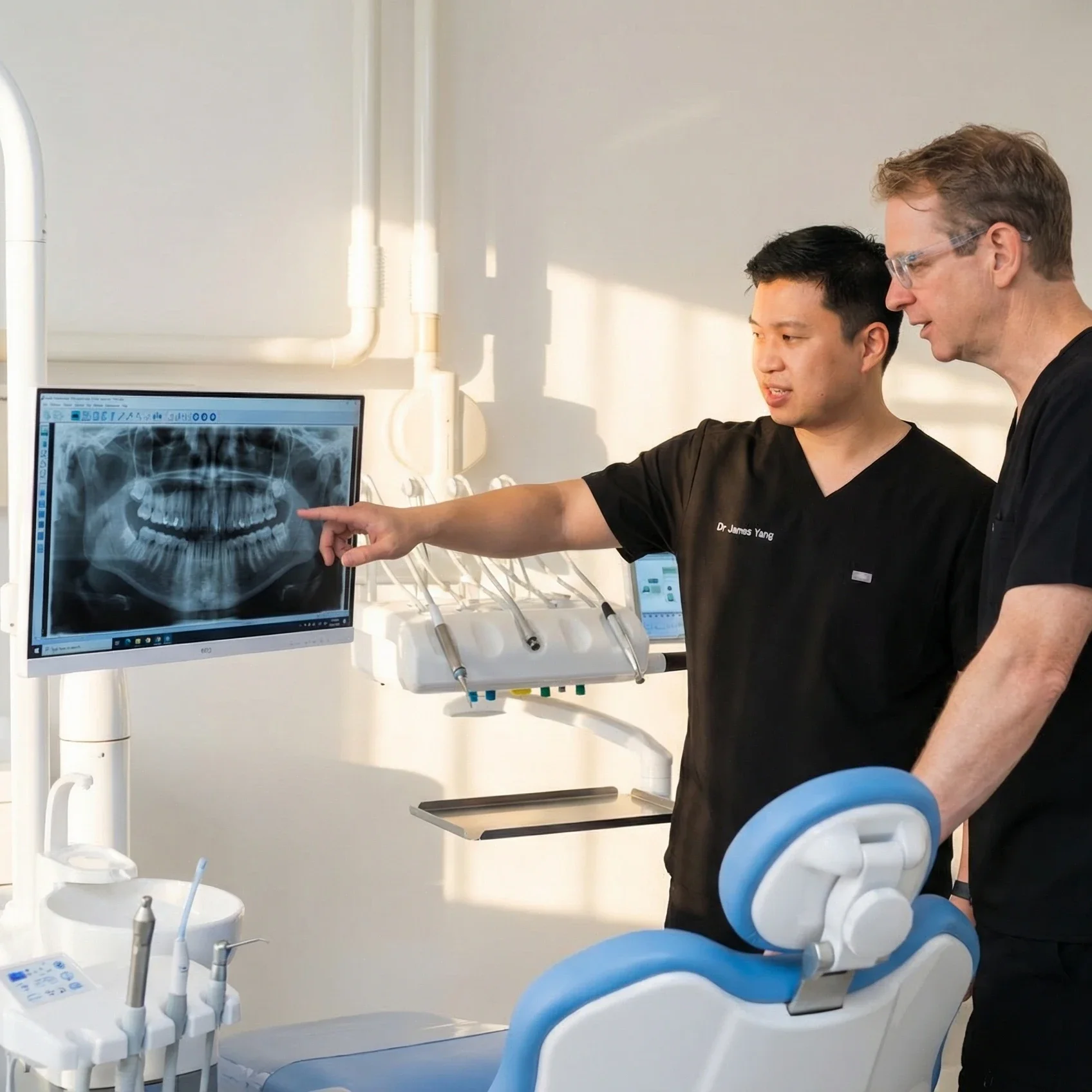
- OPG (panoramic) x-rays show a broad view of your entire mouth in one image, including all teeth, both jaws and the surrounding structures. These are helpful for assessing wisdom teeth, planning orthodontic treatment or getting an overall picture of your oral health.
Helping you stay ahead of problems
At Grange Road Dental, we take x-rays because they help us provide better care. By seeing the full picture of your oral health, we can identify concerns before they become bigger issues. This approach supports our goal of keeping your treatment as straightforward and comfortable as possible.
If you have any questions about x-rays or what we are looking for, please ask. We are always happy to explain what we see and why it matters for your dental health.
Why does my dentist take x-rays?
X-rays let us see what a visual exam cannot — decay between and under teeth, bone loss from gum disease, infections at the roots, and impacted teeth. This helps us catch problems early, while treatment is still simple.
How often do I need dental x-rays?
It depends on your individual oral health. Some patients benefit from x-rays every year, while others need them less often. We will always discuss what is recommended for your situation.
What happens when I have dental x-rays?
Taking x-rays is quick and comfortable. You bite gently on a small sensor or film while each image is captured, and the process takes only a few seconds per image.
What types of dental x-rays are there?
The main types are bitewing x-rays for decay between the back teeth, periapical x-rays that show a whole tooth and its root, and OPG panoramic x-rays that give a broad view of the mouth, which is useful for wisdom teeth.
Recent articles



Why do crowns fail, and how long do they last?
24 Sept 2026