Sensitive teeth: what causes them and how to find relief
If you have ever winced at a sip of cold water or felt a sharp sting when biting into something sweet, you are not alone. Tooth sensitivity is one of the most common dental complaints we see at Grange Road Dental, and the good news is that it is usually very manageable once we identify what is going on.
What causes sensitive teeth?
To understand sensitivity, it helps to know a little about tooth structure. Your teeth are protected by an outer layer of enamel, which is the hardest substance in the human body. Beneath the enamel sits a softer layer called dentine, which contains tiny channels (tubules) that lead to the nerve of the tooth. When enamel wears away or gums recede, the dentine becomes exposed, and those tubules allow hot, cold, sweet, or acidic substances to reach the nerve directly. That is what causes the sharp, sudden discomfort.
The most common reasons for this exposure include:
- Gum recession, which exposes the root surface where there is no protective enamel
- Worn or thinning enamel from heavy brushing, grinding, or general wear over time
- Acidic foods and drinks, including soft drinks, energy drinks, sports drinks, store-bought fruit juices, lemon juice in water, apple cider vinegar, and wine, including sparkling wine
- An acidic oral environment caused by reduced saliva flow, acid reflux, or silent reflux
In each of these situations, the protective surface layer is being gradually stripped away, leaving the sensitive dentine underneath vulnerable.
Acidic drinks and root surface sensitivity
One pattern Dr Andrew discusses with patients almost every week is root surface sensitivity driven by acidic drinks. When gums recede, the exposed root has no enamel covering it, only dentine. Regular acidic drinks gradually strip that dentine root surface and keep it sensitive, and this applies just as much to drinks that feel healthy, such as lemon water or apple cider vinegar, as it does to soft drinks, energy drinks, wine and sparkling wine.
It is not only how much acid you drink, but how long it stays in contact with your teeth. Sipping an acidic drink slowly over an hour bathes the root surfaces in acid the whole time, so if you do have one, it is kinder to your teeth to drink it reasonably quickly rather than nursing it.
What does tooth sensitivity feel like?
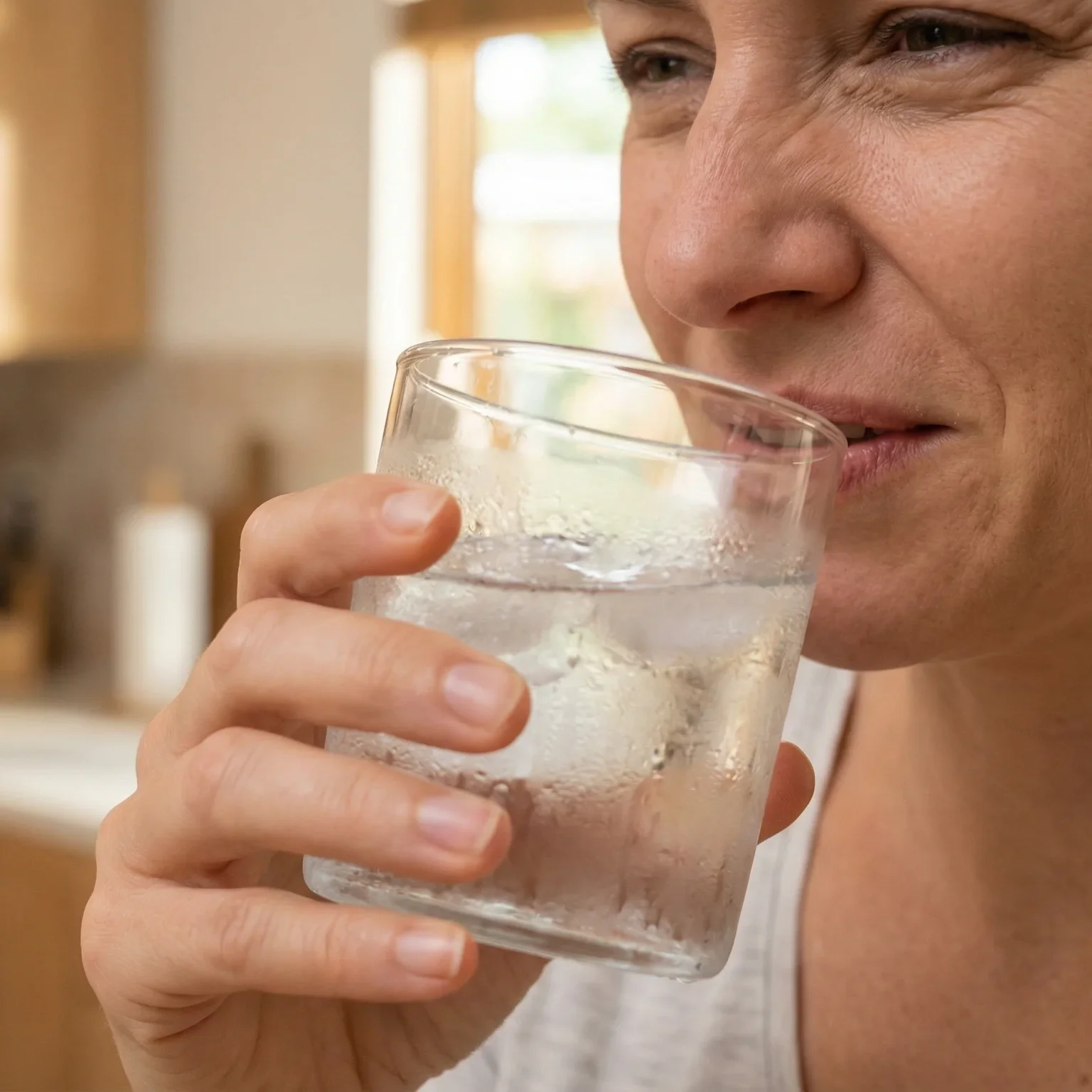
Sensitivity can present in several ways. You might notice discomfort with cold drinks or food, hot beverages, sweet or sugary items, or even when touching the tooth with your tongue or toothbrush. The sensation is typically a short, sharp sting rather than a lingering ache. If you experience prolonged or throbbing pain, that may indicate a different issue, and we would recommend booking a dental check-up sooner rather than later.
Practical steps you can take at home
There are several things you can do right away to help reduce sensitivity:
Use a sensitive toothpaste. These products work by plugging and sealing the exposed dentine tubules, creating a barrier against triggers. Our preferred everyday toothpaste for sensitivity is Colgate Sensitive Pro-Relief (CSPR), which puts an immediate protective coating on the tooth surface. For best results, try this approach for a couple of weeks:
- Brush your teeth thoroughly with the sensitive toothpaste
- Spit out the excess but do not rinse your mouth
- Apply a small amount of the toothpaste directly to the sensitive areas using a clean finger
- Gently rub it in for about 20 seconds, then leave it in place without rinsing
This extra rub-on step allows the active ingredients to sit on the tooth surface for longer, giving them more time to block those exposed tubules. Dr Andrew often suggests both strategies together: CSPR as your everyday toothpaste, plus a small amount rubbed directly onto the sensitive spots.
Ask about a higher-strength fluoride toothpaste. For patients with ongoing root surface sensitivity or a higher risk of decay, Dr Andrew often pairs CSPR with NeutraFluor 5000, a higher-strength fluoride toothpaste that helps to reduce decay risk and tooth root sensitivity. Ask us at your next visit whether this two-toothpaste approach suits your situation.
Avoid whitening toothpastes while managing sensitivity. Many whitening formulas contain micro-abrasive particles designed to polish stains away. Unfortunately, these same particles can further wear down already compromised enamel and make sensitivity worse.
Consider a remineralising product. Calcium-based remineralising creams and pastes can help strengthen the tooth surface, reduce sensitivity, and support enamel health. Your dentist or hygienist can recommend a suitable option for your situation.
Watch your diet. Reducing your intake of acidic drinks is one of the simplest ways to protect your enamel and any exposed root surfaces. If you do enjoy acidic beverages, drink them reasonably quickly rather than sipping over a long period, try a straw, and avoid brushing your teeth for at least 30 minutes afterwards, as the tooth surface is temporarily softened by the acid.
Try a bicarb soda mouth rinse after acid exposure. After an acidic drink or an episode of acid reflux, rinsing with a bicarb soda solution helps to neutralise the acid in your mouth straight away. Rinse and spit it out, never swallow it. Your saliva neutralises acid naturally, but if you have a dry mouth, whether from dehydration or from medications that reduce saliva, this simple rinse gives it some extra help.
When to see your dentist
While home care can make a real difference, it is important to have a dentist assess the underlying cause of your sensitivity. At Grange Road Dental, we can determine whether the issue is related to gum recession, enamel wear, acid erosion, or something else entirely. Understanding the root cause helps us prevent the problem from recurring.
For areas of significant sensitivity, professional treatments are available. Dental sealants or fillings can provide a longer-lasting seal over exposed dentine, offering more durable protection where toothpaste alone may not be enough. Regular professional cleans, including our EMS Airflow clean, which many patients with sensitive teeth find more comfortable, and preventive care also play an important role in keeping your teeth and gums healthy.
Here is the take-home guide we give patients for managing sensitive teeth at home, ready to print or save:


Do not put up with the discomfort
Tooth sensitivity is common, but that does not mean you need to live with it. With the right combination of home care and professional guidance, most patients notice a significant improvement. If sensitive teeth are affecting your daily life, our team is here to help. Give us a call on (07) 3281 6666 or book an appointment online so we can get to the bottom of it together.
What causes sensitive teeth?
Sensitivity happens when the softer dentine beneath your enamel becomes exposed, usually through gum recession, worn or thinning enamel, acidic foods and drinks, or an acidic mouth. Tiny channels in the dentine then let hot, cold and sweet reach the nerve.
What does tooth sensitivity feel like?
It is typically a short, sharp sting triggered by cold, hot or sweet things, or by touching the tooth, rather than a lingering ache. Prolonged or throbbing pain can point to a different issue that is worth checking sooner.
How can I relieve sensitive teeth at home?
Use a sensitive toothpaste (our preferred everyday option is Colgate Sensitive Pro-Relief), spitting but not rinsing and rubbing a little onto the sensitive spots, avoid whitening toothpastes while it settles, consider a remineralising product, and cut back on acidic drinks.
When should I see a dentist about sensitive teeth?
It is worth having a dentist find the underlying cause, especially if the sensitivity is significant or persistent. Professional treatments such as sealants or fillings can give lasting protection where toothpaste alone is not enough.
What is the best toothpaste for sensitive teeth?
Dr Andrew's usual recommendation is Colgate Sensitive Pro-Relief (CSPR) as your everyday toothpaste, because it puts an immediate protective coating on the tooth surface. For ongoing root surface sensitivity or a higher decay risk, he may pair it with NeutraFluor 5000, a higher-strength fluoride toothpaste that helps to reduce decay risk and root sensitivity.
Can I rinse with bicarb soda after acidic drinks or reflux?
Yes. Rinsing with a bicarb soda solution after an acidic drink or an acid reflux episode helps to neutralise the acid in your mouth straight away. Rinse and spit it out, never swallow it. It is especially useful if you have a dry mouth from dehydration or from medications that reduce saliva.
Recent articles



Why do crowns fail, and how long do they last?
24 Sept 2026