FAQ: Children and baby tooth brushing tips
One of the most common questions we hear from parents at our children's dentistry appointments is about tooth brushing. When should you start? How much toothpaste is enough? And what do you do when your toddler clamps their mouth shut and refuses to cooperate? Here are our answers to the questions Ipswich families ask most often.
When should I start brushing my child's teeth?
Even before the first tooth appears, you can gently wipe your baby's gums with a soft, damp cloth after feeds. This helps remove bacteria and gets your little one used to the sensation of having their mouth cleaned. Once that first tooth breaks through, it is time to introduce a small, soft-bristled toothbrush designed for infants.
How much toothpaste should I use?
The amount of toothpaste matters more than many parents realise. The Australian Dental Association recommends the following:
- Under 18 months: Use water only on the brush, unless your dentist advises otherwise.
- 18 months to 6 years: A small smear of low-fluoride children's toothpaste, roughly the size of a grain of rice.
- 6 years and older: A pea-sized amount of standard fluoride toothpaste.
Young children tend to swallow toothpaste rather than spit it out, so keeping the amount small is important. If you are unsure which product suits your child, our team can offer guidance at your next teeth cleaning visit.
How long should I help with brushing?
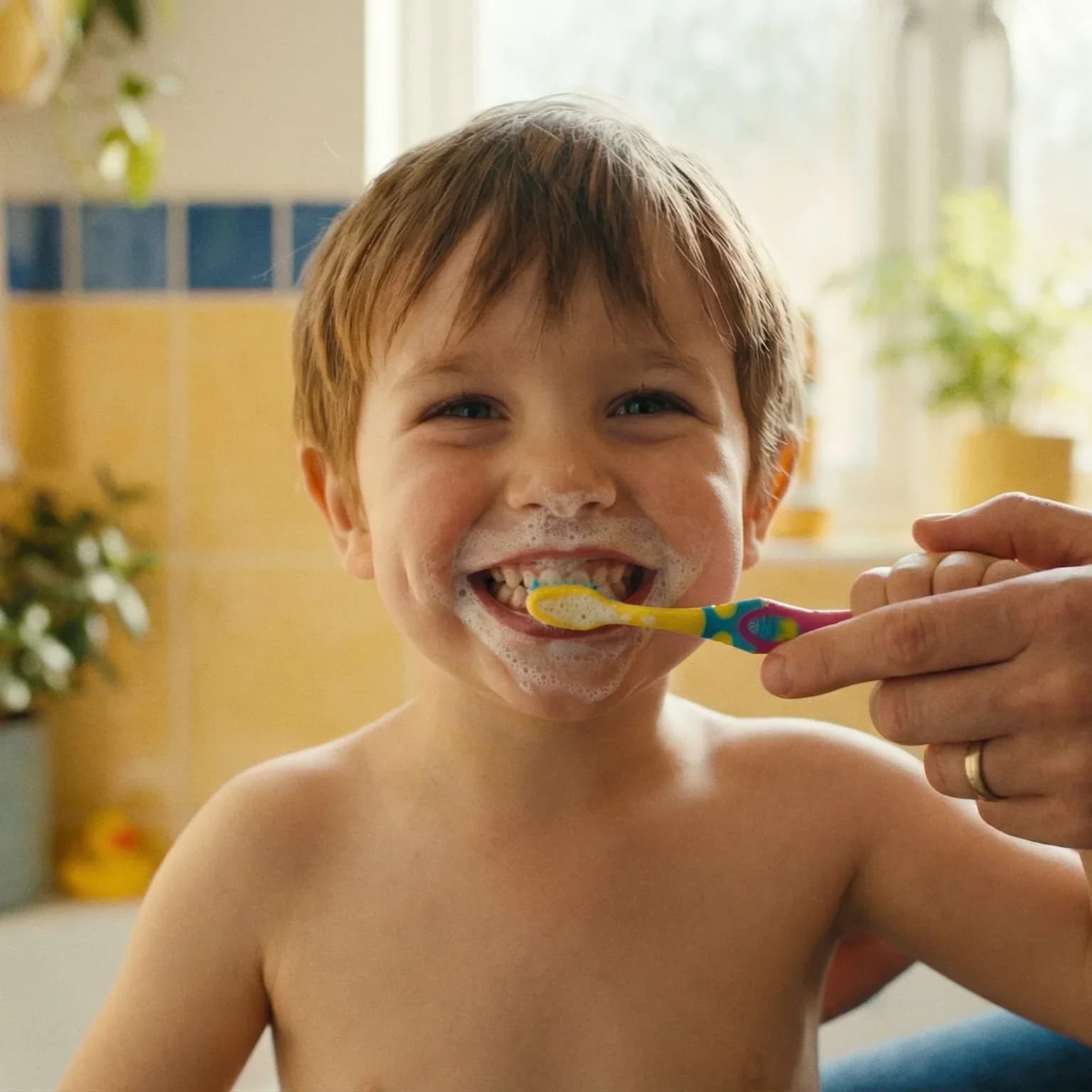
Children generally lack the fine motor skills needed for thorough brushing until around age seven or eight. Until then, parents should either brush for their child or closely supervise and follow up with a second pass. Aim for two minutes of brushing, twice a day. A fun timer, a favourite song, or a brushing app can help make those two minutes feel less like a chore.
What if my child resists brushing?
Resistance is completely normal, especially with toddlers. Here are a few strategies that may help:
- Brush together. Children love to copy what grown-ups do. Let them watch you brush, then take turns.
- Offer choices. Let your child pick their toothbrush colour or a flavoured toothpaste. A small sense of control can make a big difference.
- Keep it positive. Praise the effort rather than forcing the issue. A calm, consistent routine works better than a nightly battle.
- Try different positions. Some parents find it easier to sit their child on their lap or stand behind them in front of a mirror.
If brushing remains a struggle, mention it at your child's next dental appointment. Our team can demonstrate gentle techniques and help your child feel more comfortable.
When should my child first visit the dentist?
The general recommendation is to book a first dental visit by your child's first birthday, or within six months of their first tooth appearing. Early visits are relaxed and focused on getting your child used to the dental environment. They also give us a chance to check development, discuss preventive care, and answer any questions you might have about diet, dummies, or thumb sucking.
Building habits that last
The brushing habits your child develops now can support their oral health well into adulthood. Consistency is more valuable than perfection. Even on difficult nights, a quick brush is better than skipping it entirely.
If you would like personalised advice for your child's age and stage, our friendly team at Grange Road Dental is always happy to help. Book a visit or call us on (07) 3281 6666.
When should I start brushing my child's teeth?
You can gently wipe your baby's gums with a soft, damp cloth even before the first tooth appears. Once that first tooth comes through, switch to a small, soft-bristled toothbrush made for infants.
How much toothpaste should my child use?
Use water only under 18 months unless your dentist advises otherwise, a rice-grain smear of low-fluoride toothpaste from 18 months to six years, and a pea-sized amount of standard fluoride toothpaste from age six.
How long should I help my child brush?
Most children do not have the coordination to brush thoroughly until around age seven or eight. Until then, brush for them or closely supervise and follow up, aiming for two minutes twice a day.
What if my child resists brushing?
Try brushing together so they can copy you, offer small choices like their toothbrush colour, keep it positive with praise rather than pressure, and experiment with different positions. If it stays a struggle, mention it at their next visit.
When should my child first see a dentist?
Book a first visit by your child's first birthday, or within six months of the first tooth appearing. Early visits are relaxed and help your child get comfortable with the dental environment.
Recent articles



Why do crowns fail, and how long do they last?
24 Sept 2026